

Recorded years before Tattoo You ‘Slave’ became one of the Stones’ deepest grooves—and one fans never got to hear live.
Recorded years before Tattoo You ‘Slave’ became one of the Stones’ deepest grooves—and one fans never got to hear live.

Forget the swagger. In this overlooked Aftermath cut, The Rolling Stones captured the specific, hollow ache of 1966 urban burnout. It’s an accidental anthem for the beautifully, hopelessly bored.

Mick Jagger gets unexpectedly tender on ‘That’s How Strong My Love Is’, a 1965 Stones cover shaped by Otis Redding and Southern soul.

The Rolling Stones slowed down Chuck Berry’s ‘Talkin’ About You’ in 1965, transforming a familiar rocker into a moodier, heavier groove with plenty of Stones swagger.

A Chuck Berry cover, a young Mick Jagger, and a crucial American TV appearance—’Around and Around’ had a bigger role in Stones history than it first seemed.

What exactly is ‘Let It Loose’ about? The Rolling Stones create a gospel-soaked confession whose meaning even Mick Jagger admits he never fully understood.

‘Con Le Mie Lacrime’ finds The Rolling Stones speaking Italian—and sounding surprisingly elegant. Discover the strange story behind this forgotten 1966 detour.

The Rolling Stones turned Chuck Berry’s ‘Carol’ into a raw 1964 rocker, with Keith Richards, Brian Jones and Charlie Watts pushing the song to the edge.

Before the Stones became the Stones, they were tearing into Chuck Berry. ‘Bye Bye Johnny’ captures a young band finding its swagger—and making plenty of glorious studio noise.

The Rolling Stones’ take on ‘Walking the Dog’ wasn’t just a Rufus Thomas cover. Brian Jones had a reason for choosing it—and the lyrics hide a decidedly cheeky wink.

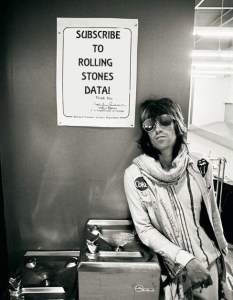 Subscribe to Stones Data here and get all posts delivered to you for free. Everybody got to go!
 Stones Data on Substack