

Keith Richards embraces a chaotic yet fulfilling life off tour, focusing on family, creativity, and spontaneity. He values small routines, like school runs and weekly outings, amidst his unconventional lifestyle.
Keith Richards embraces a chaotic yet fulfilling life off tour, focusing on family, creativity, and spontaneity. He values small routines, like school runs and weekly outings, amidst his unconventional lifestyle.

In a 2012 interview Mick Jagger and Keith Richards reflected on their 50-year partnership. Their conversation emphasized living in the present, avoiding nostalgia while acknowledging their enduring legacy as active musicians.

The Rolling Stones’ unreleased piano instrumental ‘All My Life II’ recorded during the 1979 Emotional Rescue sessions, showcases an exploratory moment reflecting the band’s evolving musical experimentation and creative overflow.

‘Memphis, Tennessee’, a song by Chuck Berry, explores themes of longing and misdirection. The Rolling Stones’ version captures its emotional depth, showcasing Berry’s influence on rock music through simplicity and storytelling.

On December 27, 1963 the Rolling Stones performed at Town Hall in Reading, England. No significant band activity is noted on this date throughout their extensive history.

Keith Richards, despite decades of substance abuse, reveals a surprising control over his drug use. His survival serves as a paradox in addiction, contrasting with many peers’ tragic fates.

Mick Jagger was found not guilty of plagiarism on April 26, 1988, after a jury determined that Patrick Alley failed to prove Jagger had copied his song, ‘Just Another Night’.

The Rolling Stones’ song ‘If You Let Me’ captures emotional hesitation, blending vulnerability with intimacy through ambiguous lyrics and a restrained folk-rock sound, highlighting a moment of personal discovery and cultural transition.

On December 26 throughout Rolling Stones history, notable events include early performances, a Christmas ad in 1963, reaction to their hairstyles, and 1975 lineup changes marking shifts in rock music.

The Rolling Stones’ debut album cover, designed by Andrew Loog Oldham, utilized a dark band photo without names to evoke curiosity. Its success propelled the band to the forefront, contrasting sharply with The Beatles.

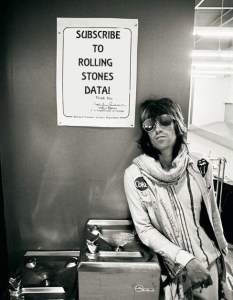 Subscribe to Stones Data here and get all posts delivered to you for free. Everybody got to go!
 Stones Data on Substack