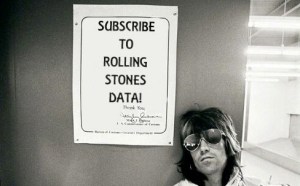
Like what you see? Help keep it going! This site runs on the support of readers like you. Your donation helps cover costs and keeps fresh Rolling Stones content coming your way every day. Thank you!
Oh baby you know it/ You know what I want to hear/ Dripping from your lips/ You don’t have to say too much/ Whisper whisper baby baby/ I just wanna hear you say to me…
Keith Richards: vocals, guitar Charlie Watts: drums Ron Wood: guitar Guest musicians: Darryl Jones (bass), Jim Keltner (percussion), Clinton Clifford (piano and organ), Darrell Leonard (trumpet), Joe Sublett (saxophone), Bernard Fowler and Blondie Chaplin (background vocals)
Sometimes the best songs don’t come from grand ideas—they come from strange, fleeting moments that stick. For You Don’t Have to Mean It Keith Richards found inspiration in an unlikely Jamaican stopover, where a simple, almost throwaway phrase revealed something deeper about human nature. It’s that tension between honesty and illusion that quietly drives the song’s emotional core, turning a casual exchange into something unexpectedly universal.
What began as a fast, retro rock ’n’ roll idea slowly evolved into something looser, warmer, and more atmospheric. As The Rolling Stones shaped the track, reggae textures and Tex-Mex flavors slipped in, giving it a sun-soaked, unhurried feel. With Richards taking full control—vocals, direction, and vibe—the song became less about polish and more about mood, drifting into a space that feels effortless but carefully crafted.
In the studio and onstage, that relaxed groove turned into a hidden gem. Backed by players like Charlie Watts and Ronnie Wood, the track found a subtle richness that rewarded close listening. Live, it offered something even rarer: a stripped-back, intimate moment led by Richards, proving that sometimes the quietest songs leave the strongest impression.
More about You Don’t Have to Mean It by The Rolling Stones
*By Marcelo Sonaglioni
Where Truth Slips Into Story
Keith Richards once found inspiration in places most travelers would overlook, but even he wasn’t expecting the night in Jamaica that sparked You Don’t Have to Mean It. Searching only for a place to sleep, he landed in a former brothel—its walls fading, its rooms alive with remnants of forgotten conversations. The proprietor introduced him to two women who lived there, and what began as small talk soon became an unexpectedly honest exchange. Keith asked, half amused and half curious, what they usually told their clients. Their answer was sharp, simple, and strangely profound: “Anything… don’t have to mean it.” He carried that phrase like a riddle, recognizing in it a universal truth: people often prefer comforting illusions over uncomfortable honesty. From that fleeting encounter grew a narrative about longing, emotional shortcuts, and the fragile requests we make of those we love, even when we don’t want the truth.
A Song That Found Its Shape Over Time
Before the track acquired the easy sway and warm breeze of its final version, You Don’t Have to Mean It began as something completely different. Keith originally imagined it as a lively Buddy Holly–style rock ’n’ roll number, crisp and fast with a retro kick. But as the band lived with the idea, its momentum softened, its pulse loosened, and little by little the song drifted toward more exotic currents. Tex-Mex contours blended with reggae accents, reflecting Keith’s deep affection for Jamaican rhythms since the 1970s. By the time the song settled into its identity, it carried the feel of sunlight on water. Keith took the lead vocal role, joined by the warm harmonies of Bernard Fowler and Blondie Chaplin. Mick Jagger, though involved in jamming early versions—often switching to drums—ultimately did not participate in the recording, leaving the song fully guided by Keith’s sensibilities.
Crafting the Groove in the Studio
The recording session brought a distinct texture to the track, shaped largely by its musicians. Clinton Clifford opened the song with expressive Hammond B-3 work and an electric piano delay that instantly grounded the rhythm in reggae tradition. Keith added a palm-muted guitar line straight out of Jamaican technique, while Ronnie Wood accented the beat with chords locked to the snap of the snare drum. Charlie Watts, often modest about his ability with reggae, delivered a fluid and precise performance, supported by Jim Keltner’s percussion and maracas. Darryl Jones made his first album appearance with a warm, grounded bass line that held the foundation in place. Horn players Joe Sublett and Darrell Leonard added the bursts of brass essential to the genre, giving the arrangement its air and lift. The final sound was relaxed, intricate, and unmistakably the product of seasoned musicians shaping something with care.
A Rare Gem Onstage
On tour, the song became an unexpected highlight, a moment where Keith stepped out front with an ease that audiences immediately embraced. During the 1997–1998 and 2002–2003 tours, the Stones performed the song without Mick Jagger, creating a more intimate, loose atmosphere. Keith handled vocals and guitar, Ron Wood shifted to organ, and Blondie Chaplin supported on rhythm guitar. Though never a staple of every show, its occasional appearances made it feel like a secret shared with longtime fans—a reminder that some songs don’t chase the spotlight but shine brightly when they choose to appear.
Like what you see? Help keep it going! This site runs on the support of readers like you. Your donation helps cover costs and keeps fresh Rolling Stones content coming your way every day. Thank you!
Privacy & Cookies: This site uses cookies. By continuing to use this website, you agree to their use.
To find out more, including how to control cookies, see here:
Cookie Policy
Subscribe to the Stones Data newsletter and get all daily posts delivered to you for free. Everybody got to go! *Support this site and help us keep sharing great content. Thanks in advance!