

Mick Jagger and Keith Richards formed a friendship as neighborhood kids, sharing adventures before fame. Their bond, rooted in proximity and shared dreams, became the foundation for their legendary partnership.
Mick Jagger and Keith Richards formed a friendship as neighborhood kids, sharing adventures before fame. Their bond, rooted in proximity and shared dreams, became the foundation for their legendary partnership.

Before their debut on July 12, 1962, Mick Jagger expressed concerns about the Rolling Stones’ identity, fearing misclassification as a mere rock ‘n’ roll band, while their roots lay in American blues.

Keith Richards recalled seeing chaos unfold before them, realizing security had failed. He stopped playing to prevent a riot, trying to divert attention from the Hells Angels without knowing someone had died.

Wilfrid Mellers contrasts the Beatles’ innocence with the Rolling Stones’ aggressive, dark sound. He highlights how the Stones used volume and raw energy to overwhelm listeners, creating distinct emotional experiences.

Keith Richards inadvertently embarked on a solo career when Mick Jagger’s project pushed him to collaborate with new musicians, leading to the creation of the successful band X-Pensive Winos.

In 1971 Keith Richards highlighted rock’n’roll’s profound cultural impact, viewing it as a disruptive, energizing force that reshaped society and challenged conventions, rather than mere loud music.

Brian Jones reflects on the Rolling Stones’ transformation from R&B rebels to circus ringmasters in 1968, celebrating an unprecedented and joyful blend of music, talent, and surreal performances.

Charlie Watts’ drumming journey began at age 13 with an Olympic kit. Despite noisy beginnings in his aunt’s bedroom, his passion laid the foundation for his legendary career with The Rolling Stones.

Keith Richards critiques Bill Wyman’s second solo album, emphasizing the importance of staying true to one’s strengths. He believes overreaching diminishes authenticity and unity within a band.

Keith Richards reflects on discovering rock & roll in the 1950s, crediting Chuck Berry’s ‘Heartbreak Hotel’ for igniting his passion for guitar, which redefined his musical aspirations and direction.

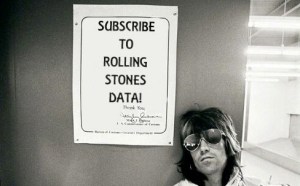
Subscribe to the Stones Data newsletter and get all daily posts delivered to you for free. Everybody got to go!
*Support this site and help us keep sharing great content. Thanks in advance!