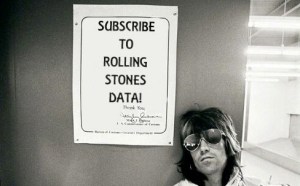
Like what you see? Help keep it going! This site runs on the support of readers like you. Your donation helps cover costs and keeps fresh Rolling Stones content coming your way every day. Thank you!
The Rolling Stones’ 1972 American tour wasn’t just a tour—it was a cultural earthquake. Wild, unpredictable, and soaked in excess, the S.T.P. (Stones Touring Party) wasn’t simply about music. It was a chaotic blend of sex, drugs, backstage madness, and groundbreaking logistics that would go on to rewrite the entire blueprint for live rock shows.
All the decadence and ambition orbiting this tour helped push concerts from basic promo stops into full-blown pop culture spectacles. It became the new template for touring—a model so bold and unruly that every major act since has borrowed from its playbook.
At the heart of it all was Exile on Main St., the band’s gritty double album that marked a bold leap into new sonic territory. Supporting that record, the Stones didn’t just promote—they detonated, and the aftershocks shaped the next decade of music history.
From Exile to Excess: The Rolling Stones’ 1972 Tour Explosion
By the summer of 1972, The Rolling Stones weren’t just returning to America—they were rewriting the rules of what a rock tour could be. It had been nearly three years since their last U.S. performance, a stretch shadowed by the chaos of Altamont. Determined to avoid a repeat, the band elevated their game: private jets, tight security, elevated stages, and a closed-off bubble of rock ‘n’ roll royalty.
But before the madness hit the road, Keith Richards had wrapped up a wild chapter in France. Having recorded Exile on Main St. in the hazy luxury of Villa Nellcôte, he was forced out of the country on drug charges, ending up in Los Angeles. There, the album was mixed and polished for its May release.
What followed in June and July became pure legend—so notorious that many say the phrase “party like a rock star” was born on this very tour. (Ref. Rolling Stones Chicago)
Sex, Sound, and Stardom: The Stones’ 1972 Circus on the Road
By 1972, The Rolling Stones had shed the last traces of ’60s idealism. No longer chasing utopian dreams through rock ‘n’ roll, they embraced full-throttle celebrity—fame, fortune, and unapologetic excess. Their American tour wasn’t about saving the world. It was about owning it.
Forget flower power. This was a mobile empire complete with financial deals, mountains of merchandise, and a staff that included lawyers, handlers, and even spiritual advisors. The band had become a corporation, and business was booming.
The tour’s wild mythology only added fuel to the spectacle: a private jet emblazoned with the iconic tongue logo, celebrity groupies trailing their every move, and press coverage that rivaled a presidential campaign. Among the most outrageous tales? A four-day stay at the Chicago Playboy mansion. Oh yeah.
The Stones didn’t just cross the line—they erased it, redefining what it meant to be rock royalty in a post-hippie world.
Glamour, Chaos, and Jagger’s Empire on the Road
The 1972 STP Tour blurred the lines between rock and aristocracy, uniting high society with backstage debauchery in a way unthinkable just a decade earlier. Mick Jagger, now part of the international jet set alongside his wife Bianca, had transcended mere rock stardom—he was royalty in a custom-tailored suit, his ego and paranoia swelling in sync with his fame.
The press followed like paparazzi at a royal wedding. Truman Capote, Terry Southern, and Robert Greenfield each documented the madness—though Capote, deep in addiction, became more of a cautionary tale than a reporter.
When Rock Met Royalty: The Rolling Stones Tour Through Capote’s Eyes
The Rolling Stones’ 1972 tour was more than just music—it was a collision of cultural universes. Even the Kennedys, those perennial icons of American high society, made an appearance. Lee Radziwill and her husband, the eccentric artist Peter Beard, were often spotted at after-parties, bringing a surreal blend of elegance and decadence to the scene.
For Truman Capote, freshly emerged from chronicling New York’s elite, the assignment must have felt like landing on Mars. Bewildered by the chaos, he reportedly ditched the tour in New Orleans with his own mini-entourage, only to reappear, unpredictably, at the climactic Madison Square Garden shows.
While Capote offered flashes of wit and confusion, it was Terry Southern and especially Robert Greenfield who truly captured the tour’s wild essence. Their writing offered a deeper dive into the madness, peeling back the glittering surface to reveal the Stones’ raw, roaring cultural takeover.
Chaos and Perfection: Inside the Stones’ Wildest Tour
Riots, arrests, and tension followed the Rolling Stones at nearly every stop of the 1972 S.T.P. Tour. From Keith Richards carrying a gun amid his deepening drug use, to the backstage feuding between Bianca Jagger and Anita Pallenberg, to the infamous Rhode Island arrest of Mick and Keith after clashing with a photographer—this was pure rock ‘n’ roll mayhem.
And yet, in the middle of all the madness, the band was musically on fire. The Exile on Main St. sessions had pushed them hard, and the energy carried over to the stage. With the help of key players like saxophonist Bobby Keys, the Stones locked in with a level of focus that surprised even their closest insiders.
As journalist Robert Greenfield perfectly described it: “Like a championship team in its finest, most fluid moments.” While the world chased chaos, the Stones chased—and found—pure rock magic. Rolling Stones S.T.P. Tour anybody? (Ref. Rolling Stones Chicago)
Like what you see? Help keep it going! This site runs on the support of readers like you. Your donation helps cover costs and keeps fresh Rolling Stones content coming your way every day. Thank you!