Enjoy this site? Please consider making a small contribution to help cover running costs and keep updating it daily. Every bit of support helps! Thank you.
The Rolling Stones had a habit of finding songs that were already good and asking a slightly dangerous question: what happens if we make them sound like us? Mercy Mercy was a perfect candidate. Don Covay’s soulful plea already had gospel roots, R&B urgency and, rather intriguingly, a young Jimi Hendrix on guitar. Then the Stones got their hands on it. Their 1965 version, recorded at Chess Studios, added heavier guitars, a tougher rhythm section and Mick Jagger’s unmistakable attitude without stripping away the song’s soul. It’s hardly the most obvious Stones cover, which may be exactly why it deserves another listen—and why Hendrix fans might want to investigate what happened before the Stones arrived.
But if you stay, baby/ I tell you what I’m gonna do/ I’m gonna work two jobs, seven days a week/ And bring my money home to you…
Written by: Covay/Miller Recorded: Chess Studios, Chicago, USA, May 10 1965
Mick Jagger: vocals Keith Richards: guitar, backing vocals Brian Jones: guitar Bill Wyman: bass Charlie Watts: drums
More about The Rolling Stones’ take on Mercy Mercy
*By Marcelo Sonaglioni
Mercy Mercy: From Gospel Roots to Rock Reinvention
Before Mercy Mercy became a beloved staple in the Rolling Stones’ 1965 catalog, it had already carved out a rich legacy rooted in soul, gospel, and the unpredictable paths of musical opportunity. Its story begins not in a major studio or with a chart-topping act, but with Don Covay—a preacher’s son from South Carolina who grew up singing gospel with his family before drifting into the emerging R&B scene. By the time the Stones discovered the song, Covay had already shaped the careers of Chubby Checker, Solomon Burke and Wilson Pickett, proving his talent as both a songwriter and performer. Yet the recording session that produced Mercy Mercy was modest, financed by a New York DJ and Atlantic Records co-founder Herb Abramson. What resulted was not only Covay’s biggest hit, but a track featuring a young, unknown guitarist named Jimi Hendrix—one that would later influence guitar styles and vocal phrasing across soul and rock music.
Early years and songwriting rise
Covay’s journey into music was anything but conventional. After performing with the gospel-based Cherry Keys he joined the Rainbows, occasionally singing alongside future legends Marvin Gaye and Billy Stewart. His connection to Little Richard—first as a chauffeur—proved pivotal. Encouraged to pursue songwriting, Covay penned material that launched major hits and provided Atlantic Records with its first chart success thanks to I’m Gonna Cry (Cry Baby). His compositions would go on to be recorded by Aretha Franklin, Stevie Wonder and Wilson Pickett, establishing him as a force behind the scenes long before he earned recognition as a performer.
Recording a soul milestone
The now-iconic Mercy Mercy session took place on May 13, 1964, at A-1 Recording Studio in New York. Covay, backed by the Goodtimers, delivered a passionate vocal with gospel inflections and emotional urgency. Reports differ on who exactly played during the session, though many credit Jimi Hendrix for the Curtis Mayfield–inspired guitar lines that helped define the track. The single reached number 1 on the Cash Box R&B chart and number 35 on the Billboard pop chart, cementing Covay’s status and setting the stage for future reinterpretations. Its pleading refrain and soulful structure became a template for vocal-driven R&B with prominent guitar work.
The Stones enter the picture
When the Rolling Stones recorded Mercy Mercy at Chess Studios in Chicago in 1965, they were in the midst of transitioning from blues interpreters to a band developing its own voice. Although they stayed close to Covay’s arrangement, they electrified the song with booming fuzz guitar riffs and interwoven lines from Keith Richards and Brian Jones. Ron Malo’s production captured a rich, sensual sound, with Charlie Watts’s prominent bass drum and Bill Wyman’s driving bass adding punch and rhythmic weight. Mick Jagger, heavily influenced by Covay’s phrasing, delivered a confident vocal that blended soul technique with emerging rock swagger. The Stones’ version opened the U.S. release of Out of Our Heads, the album that gave them their first American number one.
Legacy and continued influence
The influence of Mercy Mercy stretches far beyond its initial chart success. Hendrix reportedly performed the song in clubs before and after the recording, later incorporating its stylistic elements into the guitar work that defined his career. Booker T. & the M.G.’s, Wilson Pickett, Gary U.S. Bonds and the 13th Floor Elevators all recorded their own versions, proving the song’s adaptability across genres.
For Stones fans, the track holds special significance. It was performed during their historic Hyde Park concert on July 5, 1969, dedicated to Brian Jones, who had died two days earlier. It also introduced Mick Taylor to the public as the band’s new guitarist, marking another turning point in their evolution.
The Lasting Legacy of Mercy Mercy
Decades later Covay would return to the Stones’ orbit, lending his unmistakable voice to backing vocals on Harlem Shuffle for their Dirty Work album in 1986, reconnecting his soul roots with rock royalty. What began as a modest soul single in 1964 had already set the stage for a musical crossroads, intertwining gospel influences, songwriting brilliance, and the early guitar experiments of legends like Jimi Hendrix. Its impact was immediate yet enduring, inspiring countless musicians and helping shape the sound of mid-60s rhythm and blues while leaving an indelible mark on rock’s trajectory.
Mercy Mercy became more than just a song; it acted as a bridge between genres and generations, a touchstone for creativity and collaboration. From Covay’s original soul groove to Hendrix’s early explorations and the Stones’ interpretation, each layer amplified its cultural resonance. Ultimately the song stands as a testament to the ripple effect a single song can create—shaping careers, influencing soundscapes, and leaving an enduring imprint on music history that continues to echo decades later.
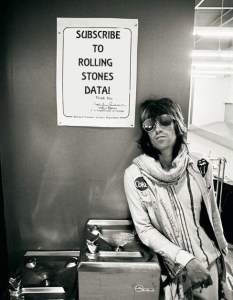
Keith Richards (1973): “There are songs like Mercy Mercy which I’d love to work up again.”
Enjoy this site? Please consider making a small contribution to help cover running costs and keep updating it daily. Every bit of support helps! Thank you.


 Stones Data on Substack