

‘As Tears Go By’, a ballad by Mick Jagger and Keith Richards, contrasts the Stones’ rough image, showcasing emotional depth and melancholy, later popularized by Marianne Faithfull’s hit version.
‘As Tears Go By’, a ballad by Mick Jagger and Keith Richards, contrasts the Stones’ rough image, showcasing emotional depth and melancholy, later popularized by Marianne Faithfull’s hit version.

On August 19 notable events in Rolling Stones history include concerts from 1963 to 2003, single releases by Bowie and Jagger, and albums featuring Keith Richards in 2008 and 2016.

Keith Richards emphasizes that the Rolling Stones focus on creating new music rather than dwelling on nostalgia. Their journey is about continuous creativity and passion, avoiding reliance on past hits.

Back in ’76, the Rolling Stones stirred major controversy with their Black and Blue ads. A huge Sunset Boulevard billboard showed model Anita Russell tied up, with text like, “I’m ‘Black and Blue’… and I love it!”

The Rolling Stones’ alternate version of ‘Saint of Me’ showcases spiritual themes intertwined with raw music, highlighting morality, transformation, and human contradictions through clever lyrics and powerful riffs.

The Rolling Stones’ ‘Oh No, Not You Again’ blends humor and real-life inspiration, featuring energetic riffs and playful lyrics. While not a classic, its raw spirit showcases the band’s enduring rock essence.

On August 18, 1990 The Rolling Stones performed in Prague, attracting over 100,000 fans. This historic concert symbolized freedom post-Velvet Revolution, blending music with a celebration of democracy.

On August 18 various significant events marked Rolling Stones history, including concerts, single releases, and notable occurrences like Mick Jagger’s injury while filming and press conferences.

Mick Jagger described the collaborative and exploratory songwriting process for the Rolling Stones’ Undercover album in Paris, where early demos solidified the core tracks before the full band joined the sessions.

The Rolling Stones’ iconic tongue logo was designed by John Pasche in 1970, inspired by Mick Jagger’s impressions of Hindu goddess Kali. Marshall Chess suggested a recognizable logo, leading to its global fame.

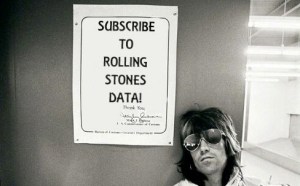
Subscribe to the Stones Data newsletter and get all daily posts delivered to you for free. Everybody got to go!
*Support this site and help us keep sharing great content. Thanks in advance!