

Mick Jagger’s relationship with Marianne Faithfull introduced him to British high society, blending rebellion with refinement, transforming him into a cultural figure who thrived in both worlds without truly belonging to either.
Mick Jagger’s relationship with Marianne Faithfull introduced him to British high society, blending rebellion with refinement, transforming him into a cultural figure who thrived in both worlds without truly belonging to either.

Mick Jagger’s ‘Sympathy for the Devil’ blends literary influences and historical themes, embodying a complex narrative voice that challenges conventional rock norms while exploring darker aspects of culture and existence.

Charlie Watts, the heartbeat of The Rolling Stones, shaped by jazz rather than rock, embodied restraint and precision. His musical foundation, rooted in jazz, deeply influenced his drumming style throughout his career.

What if rock survival is about endurance, not excess? Keith Richards defies expectations, outlasting trends and ignoring doctors, blending instinct and risk into a unique resilience that challenges modern ideas of longevity.

The Rolling Stones’ Rock and Roll Circus, filmed in 1968 and released in 1996, blends chaotic performances and star cameos, showcasing the band’s unpredictable spirit during their creative peak.

Mick Jagger emphasizes the unpredictability of live performances, viewing each concert as a unique exchange with the audience that shapes the experience, creating an electric, unforgettable atmosphere.

In 1963 The Rolling Stones transitioned from a local band to rising stars after a pivotal performance in Middlesbrough, leading to a UK tour and a notable opportunity alongside Bo Diddley and The Everly Brothers.

Mick Jagger and John Lennon shared a complex friendship marked by respect and rivalry, evolving from friendly contemporaries to deeper connections despite fame-induced tensions, ultimately leading to mutual admiration throughout their iconic careers in rock music.

Mick Jagger describes ‘Get Off of My Cloud’ as a post-teenage alienation anthem reflecting societal constraints. The song’s defiant energy became a timeless declaration of independence for a generation.

Bill Wyman’s journey from a wartime London childhood to his role as the steady bassist for The Rolling Stones exemplifies dedication and technical mastery, significantly shaping the band’s legendary sound.

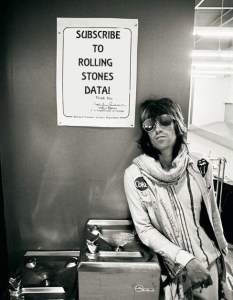 Subscribe to Stones Data here and get all posts delivered to you for free. Everybody got to go!
 Stones Data on Substack